
Subcategories


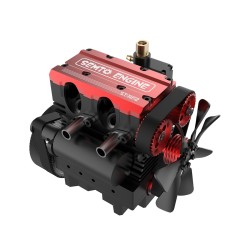
How to Compare Internal Combustion Engine Models
Quick answer: first separate true fuel-burning miniature engines from motorized assembly models and cutaway teaching models. Then compare fuel, cylinder layout, valve train, cooling, ignition, starting system and what is included. A realistic moving model is not automatically a combustion engine, and a working engine is not automatically supplied with every system required to run.
Three different products can look like a “working engine”
| Product type | Energy source | What it shows | Buying check |
|---|---|---|---|
| Fuel-burning miniature engine | Published gasoline, methanol/nitro or other specified fuel | Real intake, compression, combustion/power and exhaust behavior | Confirm ignition, starter, fuel system, cooling and break-in requirements |
| Motorized assembly model | Electric motor or battery | Crank, piston and valve motion without combustion | Confirm motor/battery inclusion and whether assembly is required |
| Cutaway or transparent teaching model | Manual or motorized movement, depending on the model | Internal relationships and cycle explanation | Do not infer power output or fuel operation unless stated |
Choose the cylinder layout that answers your question
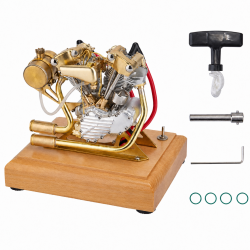
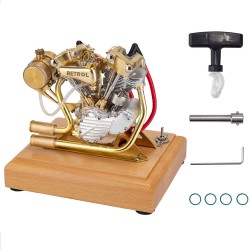
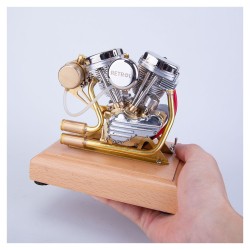
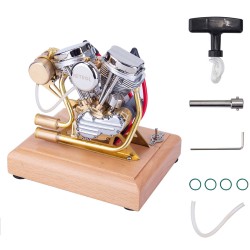
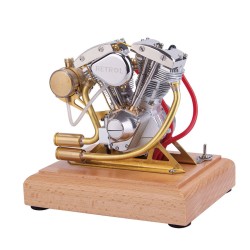
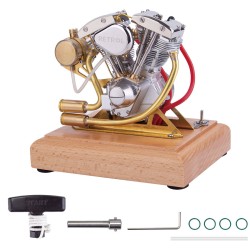
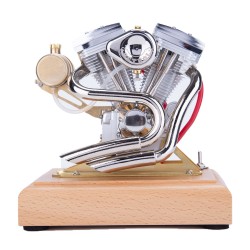
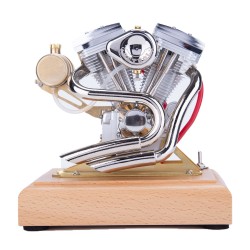
- Twin-cylinder and motorcycle engine models compare V-twin, boxer and inline-twin packaging and balance.
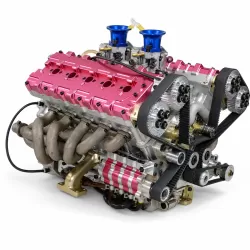
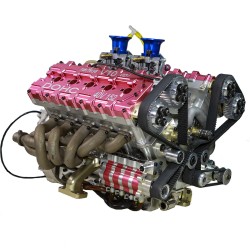
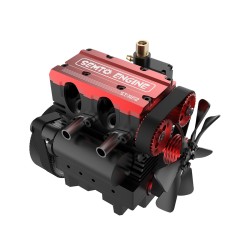
- Inline multi-cylinder models include inline-two, inline-four and other layouts with different valve trains and cooling systems.
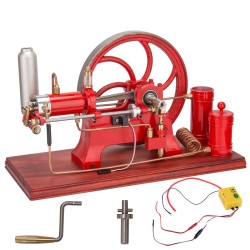
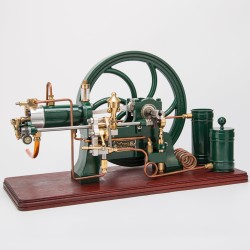
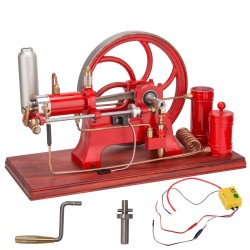
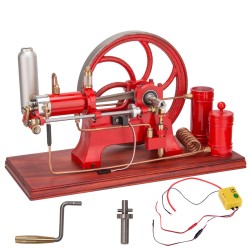
- Stationary and tractor engine models emphasize governors, large flywheels and heritage engine arrangements.
- Hit-and-miss models specifically focus on governor-controlled firing and coasting cycles.
- Radial engine kits organize cylinders around a central crank mechanism for aircraft-inspired study.
Four-stroke does not describe the whole engine
In a four-stroke cycle, the piston moves through intake, compression, power and exhaust strokes while the crankshaft completes two revolutions. Product behavior still depends on valve timing, combustion chamber, ignition, carburetion or injection, cooling and exhaust design. OHV, OHC/DOHC, flathead and sleeve-valve labels describe different mechanisms and should not be treated as interchangeable keywords.
What must be verified before running a fuel engine
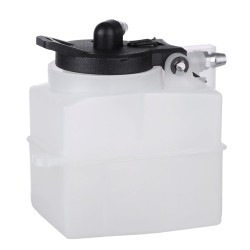
- Fuel: use only the specified fuel and lubricant mixture.
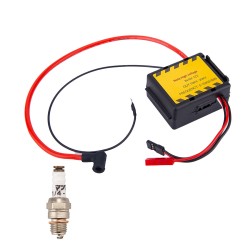
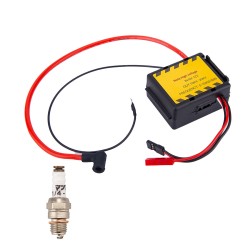
- Ignition: confirm module, spark plug, voltage and timing requirements.
- Starting: identify whether a starter motor, drill interface, recoil starter or manual procedure is required.
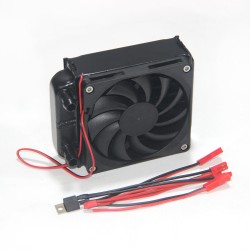
- Cooling: confirm air cooling or every required part of a water-cooling loop.
- Mounting and exhaust: secure the engine to a suitable base and keep hot exhaust away from people and combustible material.
- Break-in and maintenance: follow the supplied manual for initial lubrication, speed/load limits and inspection.
Frequently asked questions
Is every internal combustion engine model capable of powering an RC vehicle?
No. A product must have suitable verified output, dimensions, mounting, clutch/transmission compatibility, cooling and controls. A display or teaching model should not be treated as an RC powerplant.
Is gasoline interchangeable with methanol or nitro fuel?
No. Fuel type is design-specific. Using an unapproved fuel can damage the engine or create a fire and control hazard.
Does “kit” mean all ignition and cooling parts are included?
No. Kit contents vary by option. Check every required support system on the exact product page.
Which engine layout is easiest to understand?
A transparent or cutaway single-cylinder model can make the basic cycle easier to see, while multi-cylinder kits add timing, balance and cooling complexity. Ease of assembly still depends on the supplied parts and instructions.
Technical reference: NASA Glenn’s four-stroke internal-combustion engine guide illustrates intake, compression, power and exhaust strokes. It supports the mechanism explanation and does not validate any product specification.