
Subcategories


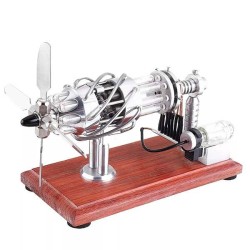
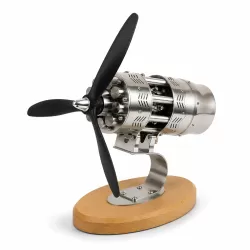
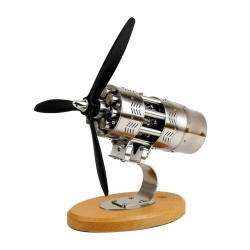
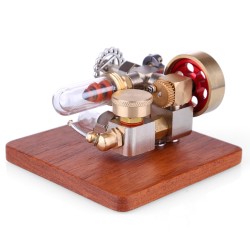
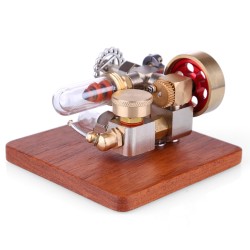
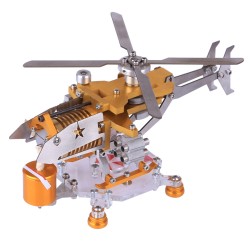
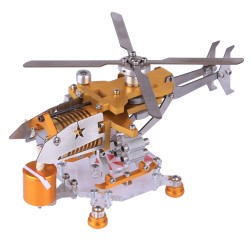
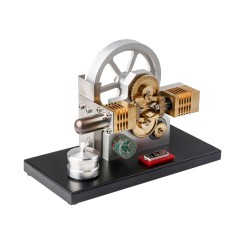
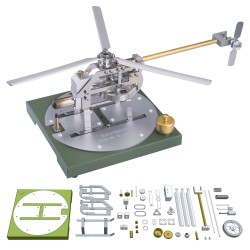
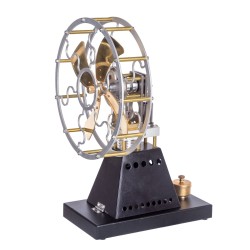
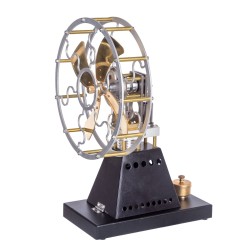
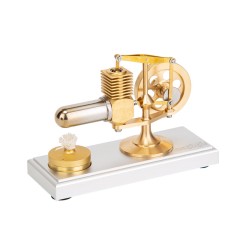
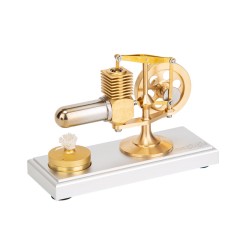
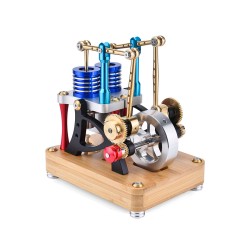
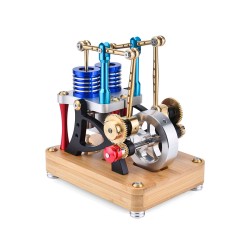
How to Choose a Stirling Engine Kit
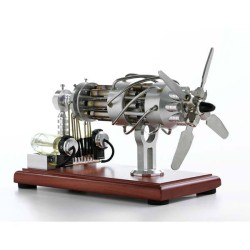
Quick answer: select a Stirling model by the temperature difference it needs, not only by cylinder count or appearance. Low-temperature-difference models are intended for gentle heat demonstrations. Flame-heated models use a concentrated hot source and have hotter exposed parts. Generator models add a small electrical load, so successful motion does not automatically mean a specific electrical output.
Stirling engines use external heat
A Stirling engine is a closed-cycle heat engine: a working gas is heated and cooled inside the mechanism, changing pressure and moving pistons or displacers. The heat source remains outside the working gas. This differs from an internal combustion engine, where combustion occurs inside the cylinder, and from a steam engine, which receives steam from a separate boiler.
| Model type | Heat requirement | What it demonstrates | Important check |
|---|---|---|---|
| Low-temperature-difference model | A relatively small hot-to-cold temperature difference | Displacer motion, phase relationship and flywheel continuity | Confirm the approved hot and cold surfaces and starting procedure |
| Flame-heated model | A specified burner or concentrated external heat source | Faster heat transfer and clearly visible reciprocating motion | Confirm fuel, burner, ventilation and hot-zone clearances |
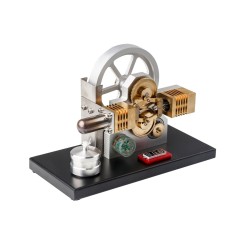
| Multi-cylinder display | Depends on the published design | Crank phasing and multiple expansion/compression spaces | Cylinder count does not prove output or efficiency |
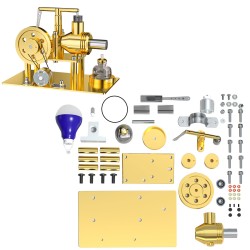
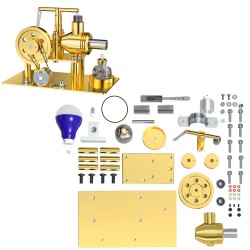
| Generator model | Enough temperature difference to overcome mechanical and electrical load | Mechanical-to-electrical conversion at demonstration scale | Confirm whether LED, generator and wiring are included and whether output is specified |
What determines whether the engine starts
The mechanism needs a sufficient temperature difference, low friction, correct alignment and the starting procedure specified for the design. Many small models require preheating followed by a gentle turn of the flywheel in the correct direction. A model that does not start should not immediately be exposed to more heat; first check that the flywheel turns freely, the displacer is not binding and the intended hot and cold sides are positioned correctly.
Choose by use case
- For a first mechanism demonstration, compare a simpler single- or twin-cylinder model with a clearly stated heat source.
- For electrical demonstration, choose a product that explicitly includes a generator and load such as an LED. Treat unstated voltage or power as unknown.
- For collecting and display, compare material, base size, visible linkage and whether the model arrives assembled.
- For broader mechanical comparison, browse all model engine kits.
- For fuel-burning piston engines, use internal combustion engine models; for boiler-fed mechanisms, use model steam engines.
Heat and fuel safety
Use only the heat source and fuel stated for the exact model. Work on a stable, heat-resistant, ventilated surface. Keep fuel containers away from ignition sources, never refill a hot or burning burner, and allow the cylinder, heater head and base to cool before handling. Small parts, exposed linkages and flywheels require controlled access and direct adult supervision where appropriate.
Frequently asked questions
Does a Stirling engine burn fuel inside the cylinder?
No. Heat is supplied externally. Some models use an alcohol burner or another flame, but combustion remains outside the sealed working-gas space.
Can every Stirling engine generate useful electricity?
No. Only products with a generator arrangement should be treated as electrical demonstrations, and usable output must be confirmed from published specifications. A lit LED does not establish a general power rating.
Why does a Stirling model need a push to start?
The initial turn helps the mechanism move through a position where the available pressure difference can sustain rotation. The required direction and preheat time depend on the design.
Is a low-temperature model safer than a flame-heated model?
It may avoid an open flame, but it can still involve hot surfaces, moving parts, glass components or small parts. Follow the exact product instructions rather than using a blanket safety label.
Technical reference: the U.S. Department of Energy describes a Stirling engine as using heated working fluid to move pistons and create mechanical power in its dish/engine system overview. That large-system explanation supports the operating principle, not the performance of a desktop model.