
Subcategories


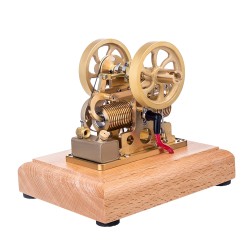
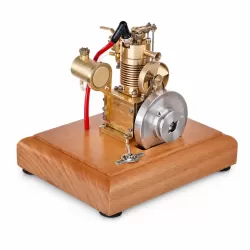
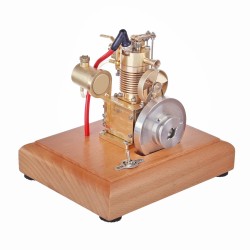
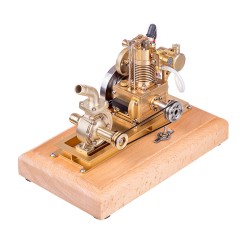
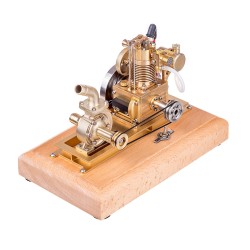
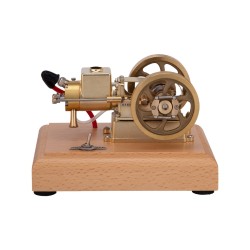
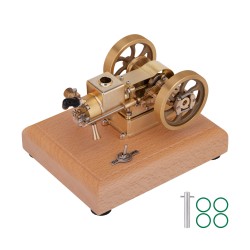
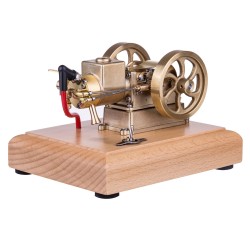
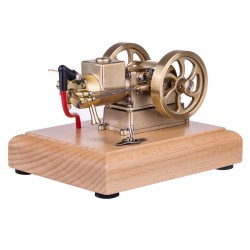
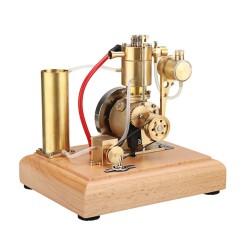
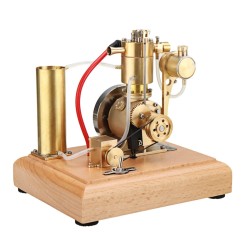
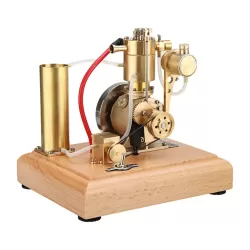
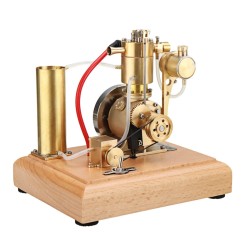
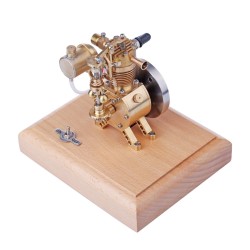
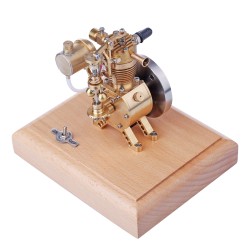
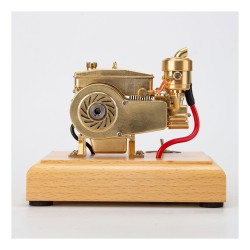
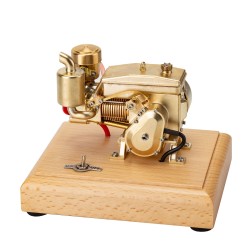
How to Choose a Model Engine Kit
Quick answer: choose the operating type before you compare appearance or price. A static assembly model teaches parts and sequence, a powered demonstration model shows motion without combustion, and a fuel-burning miniature engine adds ignition, cooling, fuel and maintenance requirements. Then compare assembly state, scale, engine layout, included support equipment and the experience needed to operate it safely.
Start with the type of experience you want
| Model type | What you can observe | Before you order | Best fit |
|---|---|---|---|
| Mechanical assembly kit | Crankshaft, pistons, valve gear, timing and power transmission | Confirm whether tools, motor and display base are included | Builders who value the assembly process |
| Powered demonstration model | Repeated mechanical motion driven by an electric motor or external heat source | Check power input, heat source and whether the model is supplied assembled | Desktop demonstration and mechanism study |
| Fuel-burning working engine | Intake, compression, ignition/combustion, exhaust and cooling systems | Verify fuel, ignition, starter, cooling, break-in and maintenance requirements | Experienced adult operators with a suitable work area |
| Cutaway or transparent teaching model | Internal layout and component relationships | Do not assume it produces power unless the specification explicitly says so | Classroom explanation and display |
Match the engine family to the question you want to explore
- Internal combustion engine models show piston, valve, ignition and cooling arrangements. Some are true fuel engines; others are assembly or teaching models.
- Model steam engines focus on external steam supply, cylinders, valve timing and flywheel motion. Engines, boilers and complete systems are different products.
- Stirling engine kits use an external temperature difference. Compare low-temperature, flame-heated and generator models by their required heat source.
- Hit-and-miss engine models emphasize flywheels and governor-controlled firing cycles.
- Radial engine kits arrange cylinders around a central crank mechanism and are useful for studying aircraft-engine geometry.
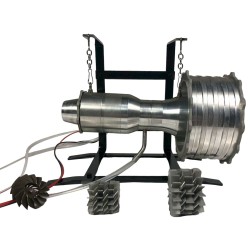
- Turbofan and jet engine kits show compressor, combustion-section and turbine-stage relationships; most model kits are mechanical displays, not thrust-producing engines.
Kit, partially assembled or ready to run?
“Kit” is not a single assembly level. A parts kit may require full mechanical assembly and timing, while another option may arrive pre-assembled but still require a starter, ignition module, battery, fuel system or cooling circuit. Read the selected option rather than relying on the product title alone. If the page offers variants, the selected version controls what is included.
Five checks that prevent a poor match
- Operating status: confirm whether the model is static, motorized, heat-powered or fuel-burning.
- Included systems: check starter, ignition, battery, fuel tank, pump, radiator, boiler, burner, tools and display base individually.
- Assembly demand: compare piece count only after checking whether machining, timing, wiring, sealing or break-in is required.
- Size and environment: verify dimensions, weight, ventilation, noise, hot surfaces and the space needed around moving parts.
- Documentation and support: use the current product page, option list and supplied manual as the controlling instructions.
What “working model engine” means on EnginesDIY
We use “working” only when the published product information describes real mechanical operation. It does not always mean fuel combustion or usable propulsion. A motorized display can have moving pistons and valves; a Stirling model can run from external heat; a cutaway can show moving parts without producing shaft power. Each product page should identify the operating method and unknown items explicitly.
Frequently asked questions
Are all model engine kits fuel-burning engines?
No. The collection includes true miniature fuel engines, externally heated engines, electric demonstration models, static assembly kits and cutaways. Check the operating-method specification on the exact product.
Which model is easiest for a first build?
A lower-parts-count mechanical or externally powered model is usually easier to manage than a fuel-burning multi-cylinder engine, but the correct choice depends on the supplied assembly state, instructions and tools. Use those verified details instead of assuming that a smaller model is easier.
Does an engine kit include everything needed to run?
Not necessarily. Ignition, starter, battery, fuel system, cooling equipment, burner or boiler may be separate. Confirm the selected option and “what is included” section before ordering.
Are these products suitable for children?
Do not infer suitability from a “STEM” or “model” label. Small parts, tools, fuel, flame, pressure, hot metal, electricity and exposed mechanisms may require adult-only handling or direct adult supervision. Follow the product manual and local rules.
Technical reference: NASA Glenn’s four-stroke engine explanation is a useful independent reference for the intake, compression, power and exhaust sequence. It explains the mechanism; it does not certify or rate any product sold here.
Guides for Choosing and Operating a Model Engine
Before choosing, compare working, motorized, cutaway, Stirling and steam model engine kits by motion, assembly, maintenance, safety and learning value. If you already own a running model, use the model engine troubleshooting path to diagnose compression, cooling, ignition, lubrication, fuel, glow-plug and vibration symptoms one system at a time.