
By EnginesDIY Editorial Team | Published and reviewed September 29, 2026
Quick Answer
Use a clean, compatible, clearly identified dispensing bottle only for the transfer from a sealed fuel can to the model tank. Before filling, check the main can's label and closure, inspect the dispensing bottle and cap, confirm the manufacturer-approved pickup or refueling filter, and keep dirt away from the tank opening. Close both containers promptly after use. A filter can intercept some particles; it cannot remove dissolved water, restore evaporated ingredients, prove a blend is correct, or make unknown fuel safe. If the fuel, bottle, filter, tubing or tank history is uncertain, do not use the engine as a test instrument.
The C-L-E-A-N record separates container identity, lid condition, equipment, air exposure and next-use decision at every transfer. This is an original inspection worksheet, not a laboratory assay or a universal filling instruction. The manufacturer of the exact engine and vehicle controls compatible fuel, equipment, routing and operating precautions. No fuel was sampled or engine tested for this article.
Key takeaways
- Keep the original fuel identity and warning label. A transparent bottle does not tell you the blend's composition.
- Inspect the can closure, dispensing-bottle cap, pickup tube, filter, tank opening and surrounding bench as one contamination path.
- Use the engine maker's filter locations and service instructions; a clean-looking screen does not certify clean or chemically sound fuel.
- Do not pour fuel from a model tank back into the original can or combine unknown batches.
- Methanol exposure and ignition hazards require ventilation, suitable protection and attention to the product label and local rules.
- Unexpected running behavior belongs to a system diagnosis, not automatic carburetor-needle changes.
Follow the can-to-bottle-to-tank path
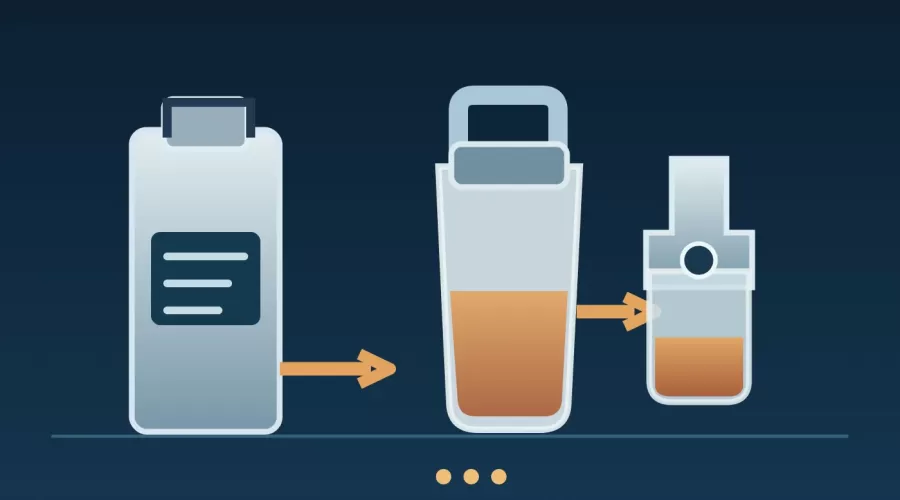
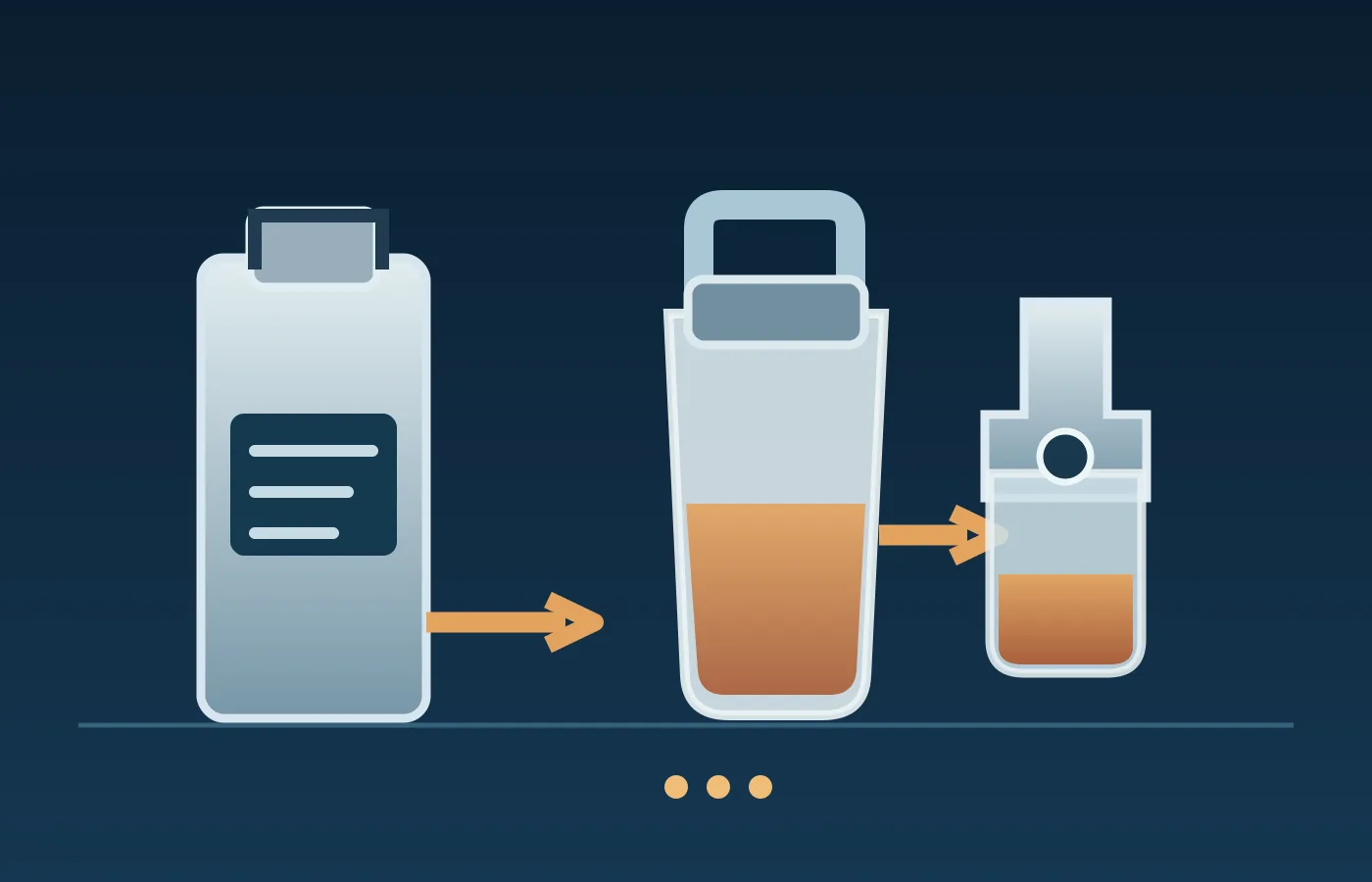
Refueling is not simply pouring a liquid. The original can, the dispensing bottle, the pickup or funnel, the bottle nozzle, the model tank and sometimes the inline filter form a chain. Every opening, uncapped rest on a dirty workbench, piece of lint or swapped accessory can add uncertainty. Mapping the chain is useful because a blockage seen at the carburetor may have begun far earlier, when the bottle was filled.
An O.S. engine instruction manual tells owners to keep their fuel container closed and describes both filtration before the tank and an inline filter before the carburetor for the model covered. The transferable principle is to control foreign matter at more than one boundary. The manual is not permission to add an arbitrary filter to every engine; added flow restriction, fitting size and maintenance need the actual maker's approval.
HPI Racing's nitro-car manual depicts use of a fuel-dispensing bottle and specifies fuel for that vehicle family. Its diagram confirms a normal bottle-to-tank workflow, not that every bottle, fuel grade or tank arrangement is interchangeable. The Losi 8IGHT nitro vehicle manual is another reminder that vehicle and engine instructions must be read together. Two vehicles can share the word “nitro” while differing in fuel recommendation, tank hardware and service details.
Our old nitro fuel screening guide answers whether a stored, transferred or uncertain batch should be rejected. This article has the narrower preventive intent: how to avoid introducing new debris and identity confusion during an otherwise routine refuel. If a can already has unknown age, damaged seal, mixed batch, sludge, water exposure or lost label, complete the old-fuel decision before setting up a clean transfer.
The C-L-E-A-N record: five checks before and after transfer
C — Container identity
Start with the original can or approved fuel package. Read the exact product and warning label; note the engine manual's required fuel class rather than inferring from the word “nitro.” A dispensing bottle should be clearly dedicated to compatible model fuel and never resemble a drink container. If the can is unmarked, a nozzle was moved between gasoline and glow fuel, or two unidentified batches were combined, the safe decision is to pause and establish identity, not to judge by color or smell.
Record the purchase or opening date when available, but do not invent an expiration period. The label, seal, handling history and maker's instructions matter more than a generic number of months. An old sealed can can still require inspection; a newly purchased but leaked or contaminated can is not guaranteed good. A small written label on the dispensing bottle should reference the source batch and date of transfer. Do not copy a mixture percentage from memory.
L — Lid, seal and bottle condition
Check whether the can cap seats normally and whether the dispensing bottle cap/nozzle closes as designed. Look for a split hose, hardened plug, loose nozzle, unusual residue around the closure, or a bottle that has been stored uncapped. Repair or replace equipment only with the maker's compatible parts. A closure that simply “still screws on” may not seal the same way it did before; record a doubt rather than relying on guesswork.
NIH/NLM PubChem's methanol record identifies methanol as miscible with water and includes source-linked handling information about closed storage. That establishes a reason to limit unnecessary open-air exposure. It does not prove that an individual RC fuel batch contains a particular amount of water, nor does it justify heating, decanting or improvised chemical testing. Repeated open/close cycles create an exposure opportunity; only evidence about the actual can can tell you its current condition.
E — Equipment cleanliness and filter identity
Inspect the bottle's pickup tube, nozzle and any maker-specified filter. Check that it is the correct assembly, seated, not visibly split or loaded with lint, and serviced according to its own instructions. Avoid touching a clean nozzle to dusty bodywork or a dirty bench. Keep caps in a clean, safe place while temporarily open; do not set the inside of a cap on a work surface. A bottle used for another chemical should not be repurposed on the assumption that a quick rinse removed all residue.
Do not substitute a mesh or filter simply because it physically fits a line. The existing tank, clunk and vent guide explains how fuel delivery depends on system architecture and where restrictions can appear. The separate fuel-tubing compatibility guide covers material and fit checks; color or softness alone do not establish chemical compatibility. If a filter or tubing change precedes starvation symptoms, document that change instead of blindly richening or leaning a needle.
A — Air exposure and transfer boundary
Choose a stable, well-ventilated location away from ignition sources and from dust kicked up by a running vehicle or fan. Follow the exact filling equipment instructions; avoid splashing and leave headspace or fill level as specified by the bottle and tank makers. Keep the original can open only for the transfer, then reseal it correctly. Close the dispensing bottle between uses. Do not assume leaving it open makes fuel “dry out” safely; vapor exposure and contamination both become harder to control.
Record if the tank cap, bottle spout or filter contacted a dirty surface. Do not blow by mouth into a fuel hose, siphon by mouth, or use an unapproved compressed-air source to clear a blockage. If a spill or suspected contact occurs, follow the label and applicable safety guidance rather than continuing the session without assessment. The goal is to keep the fuel path known, not to maximize fueling speed.
N — Next-use decision
Before the engine runs, check that the correct can was used, the bottle was closed, no unusual particles or layering were seen, and the tank cap and lines are restored as the manual directs. An observation such as “no visible particles” is limited: small particles, dissolved water or an incorrect blend may be invisible. The decision can be “continue under the exact manual,” “hold for manufacturer advice,” or “retire and arrange proper disposal.” It is never “run it until the contamination burns off.”
After the session, keep used tank fuel separate from the clean original can. The model tank is connected to vents or pressure plumbing and carries its own debris and handling history. If the maker directs draining for storage, use its approved collection method, keep the waste identified and do not return it to the main supply. The nitro storage and after-run guide owns the engine-side end-of-day procedure; this record follows the fuel-container side.
What a filter can—and cannot—do
A screen or manufacturer-approved filter can trap some solid matter upstream of a tank or carburetor. It can also become restricted, leak at a fitting, or collect dirt that later moves if handled poorly. O.S. specifically calls for periodic filter cleaning in its manual, illustrating that installing a filter is not the end of maintenance. The service schedule, medium and location belong to the actual engine and filter product, not a universal pore-size chart copied from another hobby.
A filter cannot identify fuel composition. It cannot separate a dissolved water fraction by ordinary particle screening, restore evaporated volatile components, replace missing lubricant, neutralize an unknown additive, or certify that a mixed can is acceptable. If an owner sees cloudy fluid or suspicious residue, filtering it into a clear bottle does not remove the need for a fuel-quality decision. Conversely, clear appearance does not prove the fuel is sound.
Do not diagnose every erratic run as dirt. A blocked tank vent, clunk that leaves the pickup, pinched tubing, an air leak, poor glow ignition, throttle linkage trouble or an incorrect mixture setting can look similar from the driver's position. Our model-engine no-start guide gives the system-level first separation. If there is credible evidence of dust reaching the intake, the nitro air-filter guide addresses the different air-side path; a fuel-bottle filter does not protect an exposed intake.
Observation-to-decision table
| Observation | What it can mean | Safe next decision | Do not conclude |
|---|---|---|---|
| Original can label and seal are intact; transfer gear clean | Identity and visible handling are traceable | Continue only if exact manual and product label match | Fuel chemistry has been laboratory certified |
| Uncapped or cracked dispensing bottle | Exposure or debris pathway is possible | Stop and replace/assess equipment and fuel history | A new nozzle alone restores unknown fuel |
| Particles visible in the pickup filter | Some material has entered upstream | Hold transfer; inspect and service per maker | The rest of the liquid is definitely clean |
| Cloudiness, layering, unusual sludge or mixed cans | Composition or identity may be uncertain | Apply old-fuel screening and local disposal path | Shaking or extra filtration makes it original fuel |
| Engine runs lean after a filter or line change | Delivery restriction, leak or unrelated tune fault | Stop sustained running; inspect system and manual | Needle movement is the complete repair |
| Fuel remains in the model tank after use | Tank-path handling history differs from clean can | Follow manual's storage/drain instruction and separate waste | Pouring it back preserves the main batch |
The table is an evidence organizer, not a set of chemistry thresholds. Its first row still requires the manufacturer fuel recommendation. Its warning rows do not say every observed particle has already damaged an engine; they say the origin and downstream exposure should be investigated before running again.
A concise day-of-use routine
Before leaving for a track or field, compare the fuel label with the current engine and vehicle instructions. Verify the original can, dispensing bottle, cap, nozzle and specified filter are present and identifiable. Pack them so the clean nozzle and cap do not contact oily tools, dusty wheels or loose hardware. Do not transport fuel in a beverage bottle or any unlabeled food container. Keep it away from heat and ignition according to its labeling and applicable local rules.
At the use site, establish a clean, ventilated station with the engine off and cool. Inspect the closure and bottle equipment before opening the can. Perform the manufacturer-approved transfer without setting clean openings on dirty surfaces. Close the can promptly and label any temporary dispensing container so its contents and source remain clear. If you notice a spill, unfamiliar odor from a changed blend, damaged tube, grit or a mislabeled bottle, pause rather than pressing on to finish the session.
After filling, restore the tank cap and routing exactly, then record any changes to bottle, filter, fuel batch or line. If the engine acts differently, those changes are diagnostic clues. The carburetor tuning guide explains why stable fuel delivery, correct glow ignition, air path and load should be established before adjusting needles. A freshly filled tank is not proof that the fuel path is open or that the fuel composition is correct.
When evaluating a new kit, ask for the exact fuel and filter instructions, serviceable tubing and replacement parts before assuming a generic bottle fits its operating method. The model engine kits collection spans different fuel and non-fuel architectures; this article does not claim every catalog model uses nitro fuel or that any accessory is compatible with a particular kit.
Methanol safety, disposal and evidence limits
CDC/NIOSH identifies methanol as toxic and highly flammable, with exposure possible through inhalation, skin, eyes and ingestion. Fuel blends also have their own labels and safety data sheets. Use appropriate ventilation, keep children and bystanders away, avoid sparks and flames, and follow the exact product's protection and first-aid instructions. Do not use smell, taste, a flame, or a running engine to decide whether an unknown liquid is fuel. Emergency-response instructions for industrial releases are not a hobbyist experiment.
U.S. EPA household hazardous waste guidance advises retaining products in original containers with labels and not pouring hazardous waste onto the ground or down a drain. Contact the local waste authority for the proper route for leftover, contaminated or unidentified model fuel; rules differ by place. Do not mix it with another waste stream to make the container look empty. This environmental advice is for disposal decisions, not a determination of whether a batch can be burned in an engine.
This article offers no universal fuel age, water percentage, filter mesh size, bottle material approval, nitromethane percentage, oil ratio, tank capacity, priming pressure or tuning setting. The sources do not verify a particular EnginesDIY product or any customer's fuel. The conceptual image has no measured component dimensions. Search demand, failure incidence and performance benefit from the C-L-E-A-N record are UNKNOWN. Manufacturer documentation and the exact fuel label take precedence.
Frequently Asked Questions
Can I keep nitro fuel in a dispensing bottle for months?
Use the fuel maker's storage instructions and original labeled container as the primary reference. A dispensing bottle has more handling and opening history; uncertain identity or seal condition warrants screening, not an invented shelf-life promise.
Will a filter remove water from nitro fuel?
A normal particulate filter is not a water-content test or a method to restore an altered blend. Methanol mixes with water. Do not assume clear filtered fuel is chemically sound.
Should I pour leftover tank fuel back into the can?
No. Keep the original can's history distinct from the vented tank and used fuel path. Follow the model's draining and local disposal instructions instead.
Does visible dirt in a refueling filter mean the carburetor is damaged?
Not necessarily. It confirms at least some upstream material was captured; inspect the filter, tank and delivery path under the maker's procedure before deciding whether anything reached the engine.
Can one fuel bottle serve nitro and gasoline models?
Do not assume chemical compatibility or that residue can be removed by a quick rinse. Use clearly dedicated, approved equipment for each fuel type and read both manufacturers' instructions.
Is a color change enough to reject or approve fuel?
It can be a warning, but color alone neither measures composition nor proves that a batch is usable. Check identity, seal, handling history and the old-fuel screening criteria.
Why did the engine run lean right after a filter change?
A restriction, fitting leak, wrong filter, line problem or unrelated cause is possible. Stop prolonged operation, record the change and diagnose the actual system before changing needles.
Conclusion
A sound refueling habit preserves fuel identity and limits new contamination at every boundary. Keep the labeled main can closed, maintain a clean compatible dispensing bottle, inspect maker-approved filters and keep used tank fuel separate. Use the C-L-E-A-N record to notice uncertainty before the starter is used. Filtration is one control for particles, not a substitute for sound fuel chemistry, safe handling or model-specific instructions.
Primary references and scope
- O.S. Engines instruction manual — closed container and filtered transfer in its engine context.
- HPI Racing nitro-car manual — dispensing bottle and model-specific fuel handling.
- Horizon Hobby/Losi 8IGHT manual — exact vehicle instruction context.
- CDC/NIOSH methanol emergency response card — methanol toxicity and flammability.
- U.S. EPA household hazardous waste guidance — labeled container and disposal boundary.
- NIH/NLM PubChem methanol record — water miscibility and handling data, not fuel-batch quality.
Leave a comment